forsyth
The premise
Somebody always knew it would rain.
Every family has one — the relative who glanced at the ridge, said bring the washing in, and was right. No app. No radar. Just a long, unhurried acquaintance with the sky.
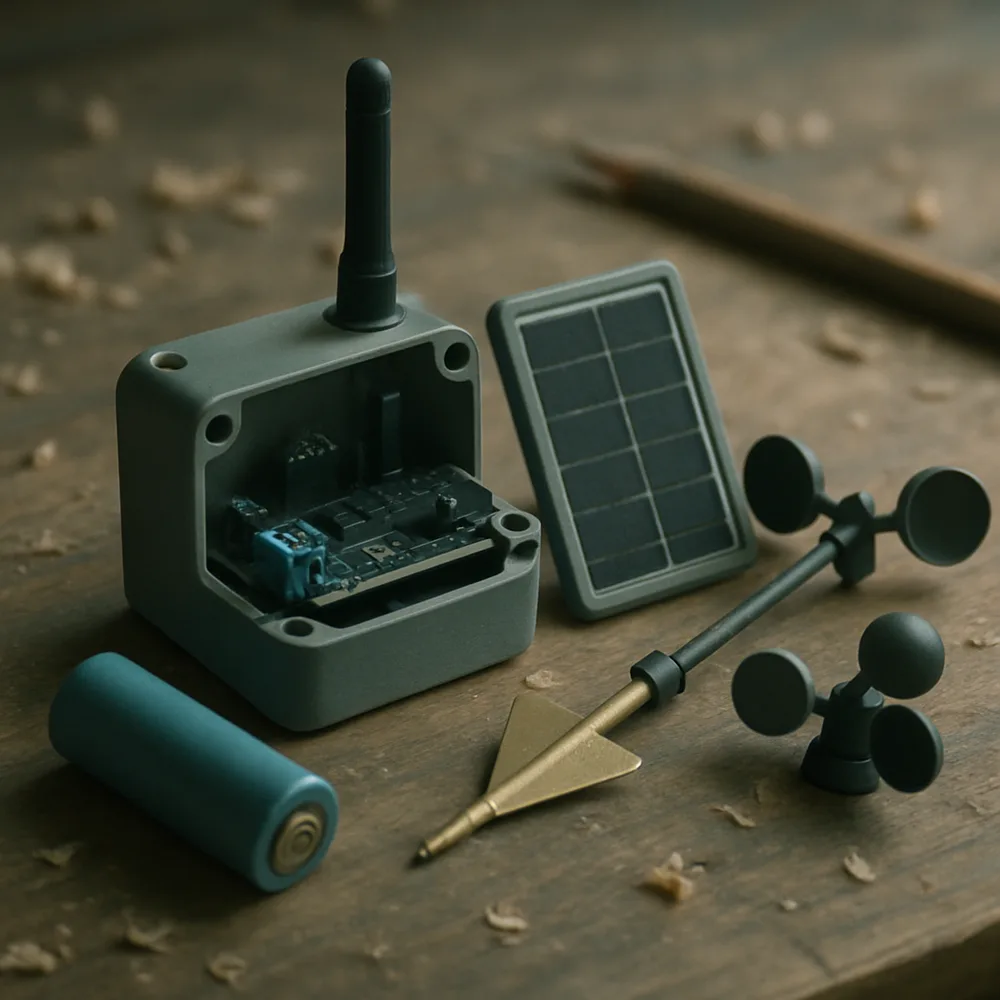
Forsyth is that relative, rebuilt in solder. Small solar-fed stations sit out on masts and rooftops, kilometres apart, measuring wind and rain and pressure and the air itself. A few times an hour each one murmurs what it saw over LoRa radio to a coordinator, which writes it all down and puts it where you can see it.
Say the name out loud. It's not subtle. It is, however, patient about being proven right.